Loading…
What if · 15 simulated seasons · 1920–1934
What if Babe Ruth played for the St. Louis Cardinals?
In December 1919 the Red Sox sold Babe Ruth to the Yankees and changed baseball forever. We sent him to St. Louis instead, and played out all fifteen seasons.
731
Home runs
.348
Batting avg
7
World Series
titles
1,359–948
Team record
The real story
The sale that didn't happen
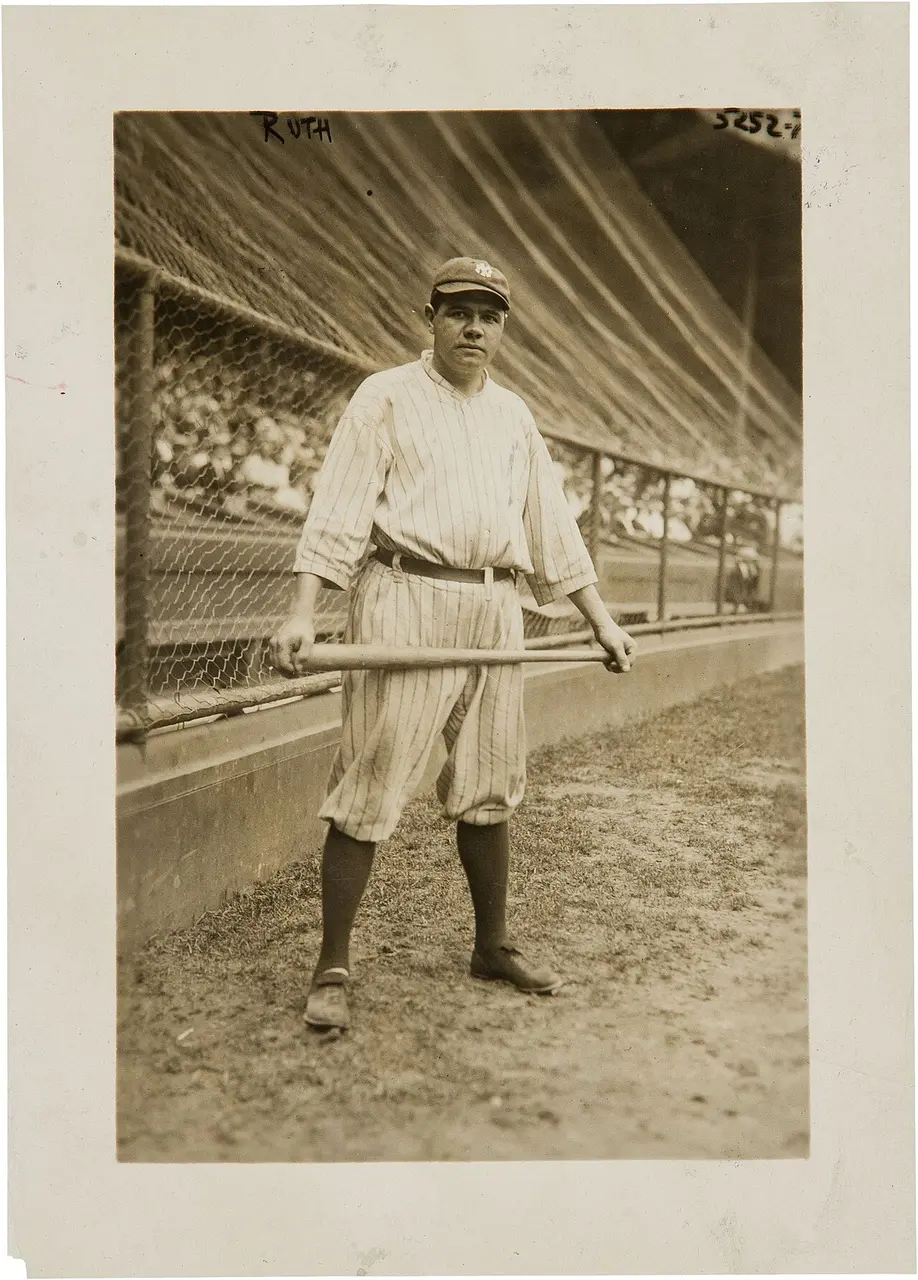
On December 26, 1919, Red Sox owner Harry Frazee sold Babe Ruth to the New York Yankees for $100,000. The Yankees had never won a pennant. Over the next fifteen years they won seven, plus four World Series, and Ruth turned the home run from a novelty into the whole point of the game.
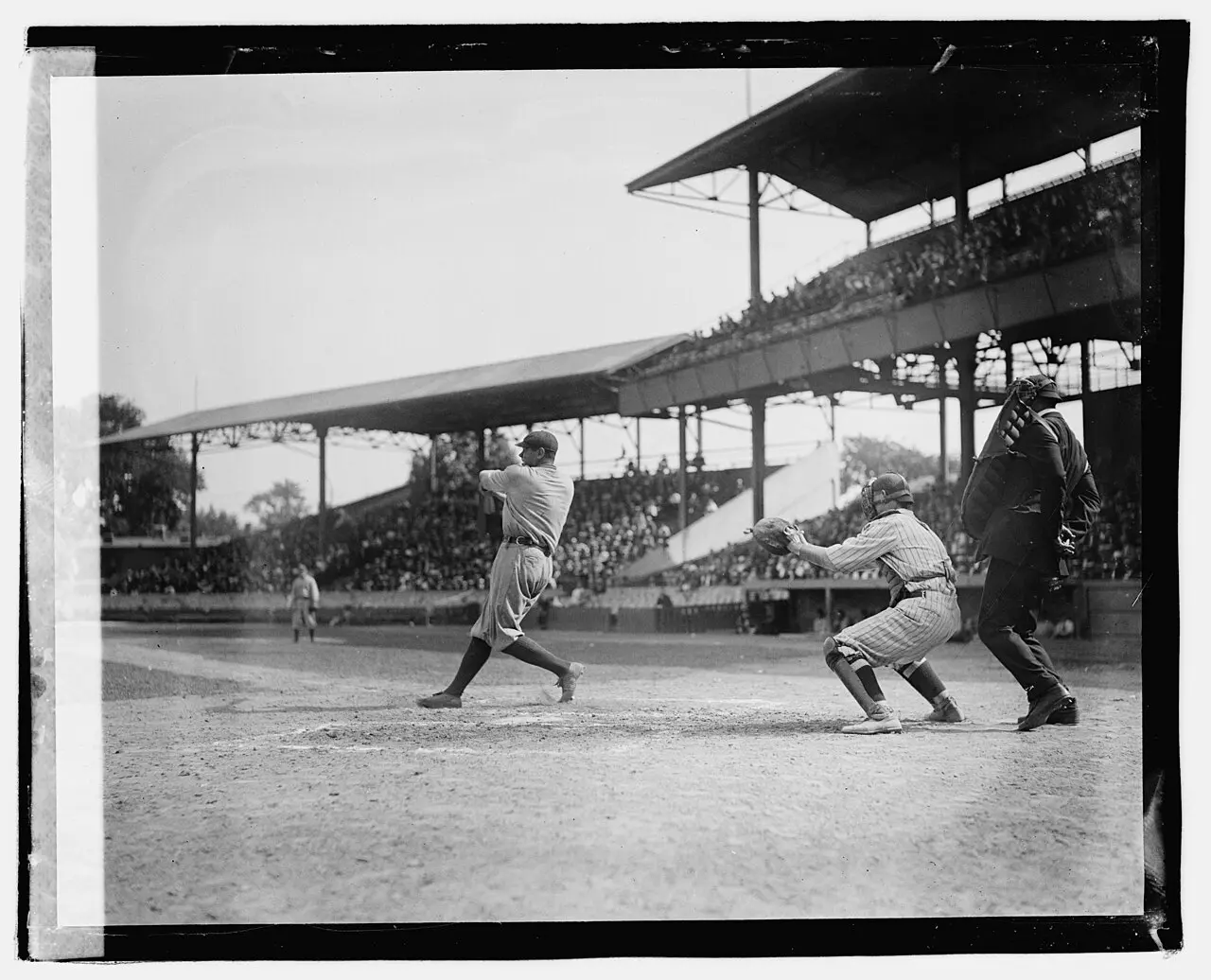
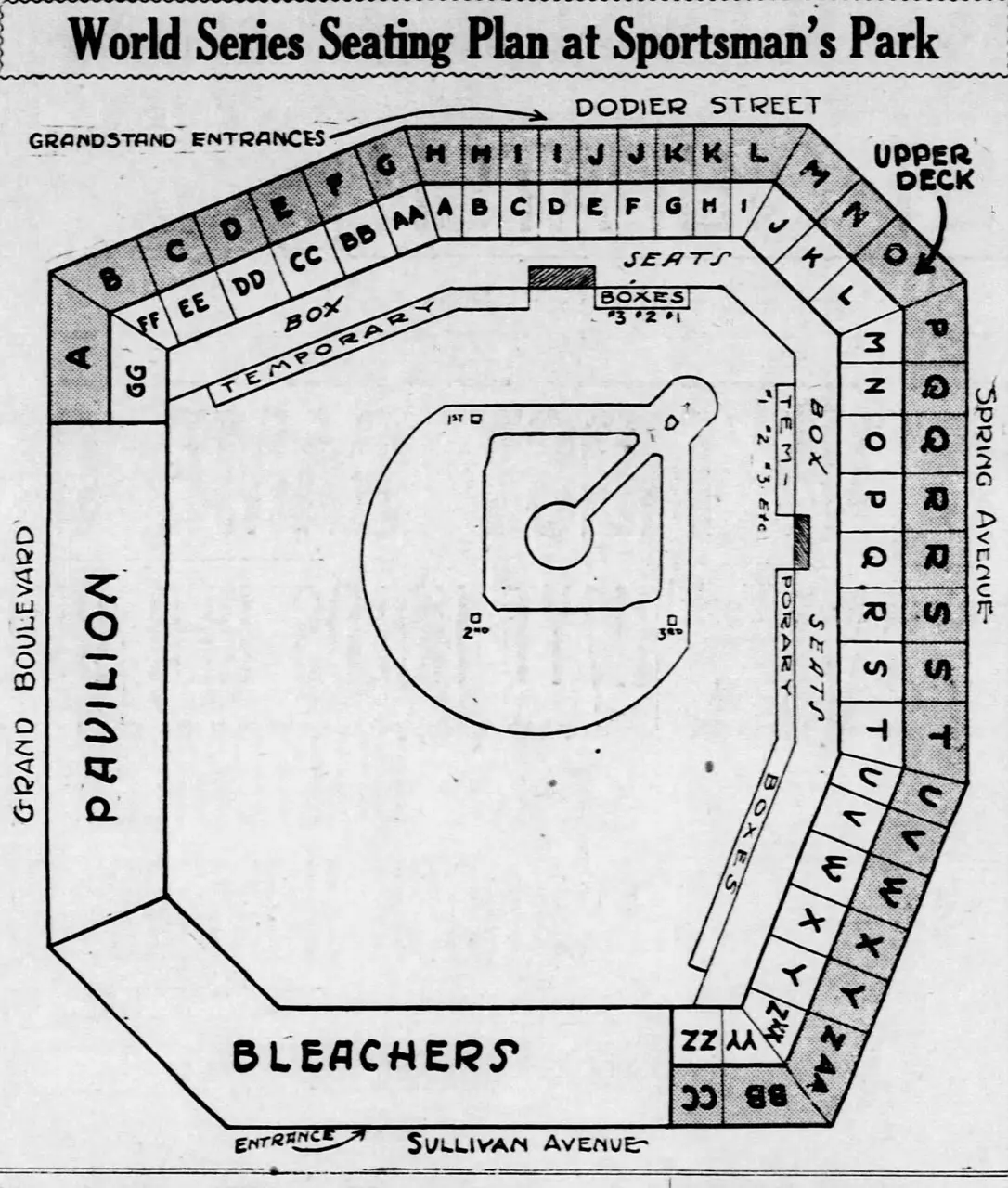
The St. Louis Cardinals were about as far from that as a team could get. They had finished 54-83 in 1919, they were broke, and by the middle of 1920 they had sold their own ballpark and moved into Sportsman's Park as the Browns' tenants. Rogers Hornsby was their only star.
So we asked: what if the Cardinals had been the ones to buy him? We gave the 1920 Cardinals a 25-year-old Babe Ruth, coming off his real 1919 season, and simulated every year from 1920 through 1934, fifty times over. Each run plays on the real 154-game schedules of the day, under the real 1920s postseason format, against that year's real rosters. The only thing we changed is where Ruth plays.
Chapter 1 · 1920–1921
A good team, not yet a great one
- AVG
- .332
- HR
- 93
- RBI
- 243
- Team
- 177–130
- Titles
- 1921
The real 1920 Cardinals went 75-79. With Ruth in right field, the simulated club goes 82-72 and finishes second. His first St. Louis summer is a very good season that is not the explosion he had in New York that same year: 36 home runs, a .305 average, 114 RBIs and 99 walks in 128 games, against the 54 homers the real Ruth hit for the Yankees.
1921 is when it happens. Ruth hits .354 with 57 home runs, scores 163 runs, and the Cardinals go 95-58, win the National League and beat the American League champion in the World Series. It is the first title in franchise history, five years before the real Cardinals won their first.
Chapter 2 · 1922–1925
The suspension and the bellyache
- AVG
- .336
- HR
- 179
- RBI
- 439
- Team
- 338–278
- Titles
- None
The simulation follows his real playing time, and the real 1920s Ruth missed chunks of two seasons. In 1922 Commissioner Landis suspended him for six weeks, and simulated Ruth plays 104 games, hitting .291 with 31 home runs. In 1925 comes the famous bellyache, and he plays 88. The Cardinals finish third both years.
In 1923 and 1924 the Cardinals win their division, and it does not matter. In the real 1920s format there are no playoffs: only the league champion reaches the World Series, and in 1923 the Giants take the National League instead. Ruth's numbers stay enormous, 50 and then 60 home runs, but his team stays home in October.
That is the part of the old-world format this story keeps honest. A Ruth-led Cardinals club that wins its division in the modern format would play October every year. In the 1920s, second-best in the league means nothing.
Chapter 3 · 1926–1931
The dynasty
- AVG
- .370
- HR
- 364
- RBI
- 877
- Team
- 587–337
- Titles
- 1926, 1927, 1928, 1930, 1931
In real history, 1926 is the year the Cardinals beat Ruth. They won the World Series in seven games against the Yankees, and the final out came when Ruth was thrown out trying to steal second. In this version he is on their side: the 1926 Cardinals go 93-61, he hits .359 with 50 home runs, and they win the Series again.
In 1927 they beat the Yankees themselves, the Murderers' Row club minus Ruth, who still reach the World Series more often than any other American League team in this world. In 1928 Ruth has the biggest season of the run: a .368 average and 83 home runs, and the Cardinals finish 103-51. Titles follow in 1930 and 1931, including a 1930 season where he hits .417 with 75 home runs and 209 runs. Five championships in six years.
Five titles in six years is a dynasty no real National League team has ever had, and it is the number to read most carefully on this page. One great hitter really can tilt a league for a decade in this engine. The 1929 club, which misses the Series at 86-68, is the reminder that he does not tilt it every single year.
Chapter 4 · 1932–1934
Still the best hitter alive
- AVG
- .328
- HR
- 95
- RBI
- 261
- Team
- 257–203
- Titles
- 1934
The late thirties treat him the way they treated the real Ruth, and the sim follows his fading playing time as well as his production. At 37 he still hits .371 with 43 home runs, but the Cardinals finish second. At 38 the average drops to .302 and the power to 29.
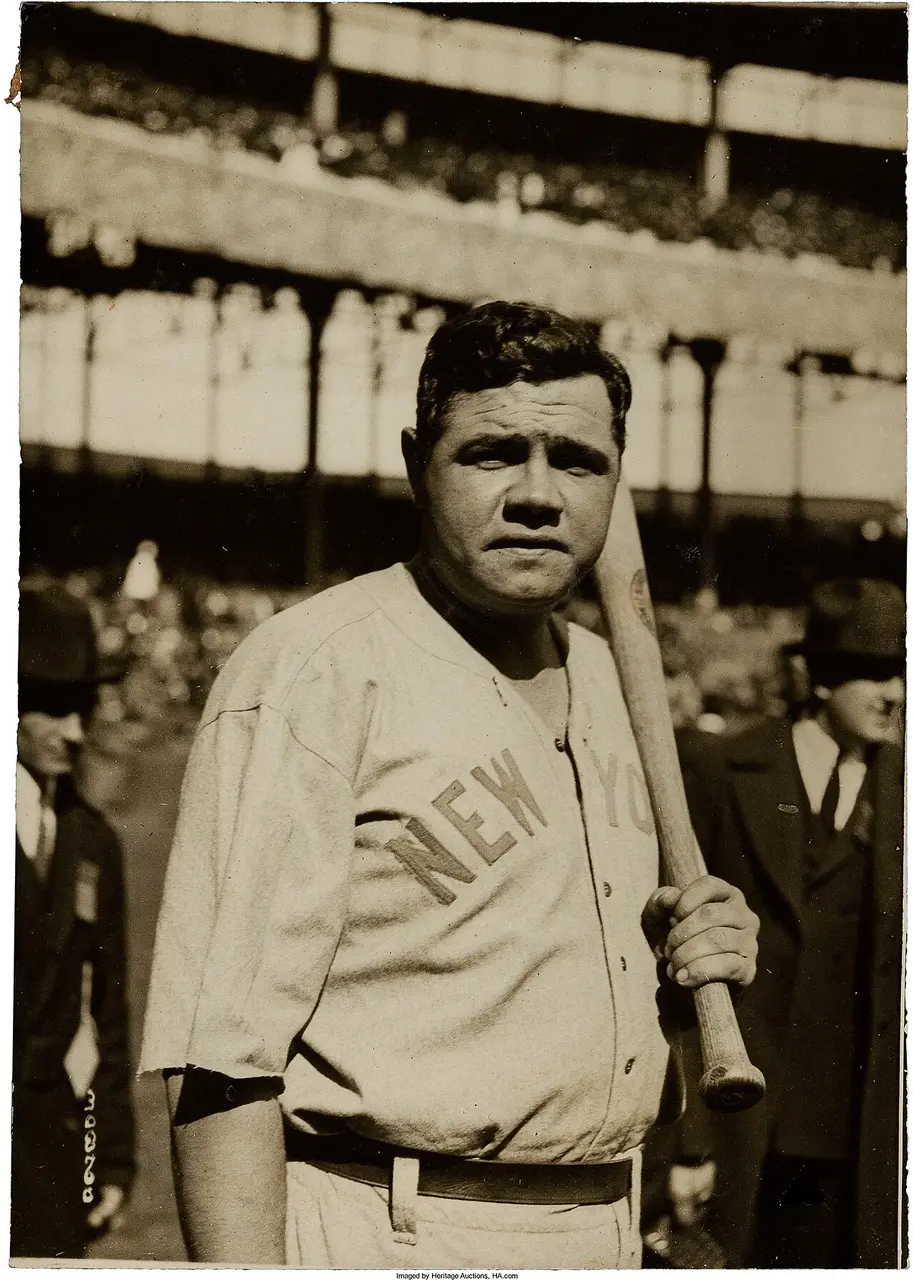
Then one last October. At 39, in 98 games, he hits .305 with 23 home runs, the 1934 Cardinals go 93-59, and they win the World Series for the seventh time with Ruth. The real Ruth's last Yankees season ended with a .288 average and 22 home runs in 125 games, and a ticket out of town. This one ends with a parade.
Season by season
Home runs, simulated vs real
The verdict
So, was he better in St. Louis?
Across the fifty runs, the median simulated Ruth hits 732.5 career home runs with a .351/.456/.715 slash line at the median, against his real 1920-34 line of 659 home runs and a .349 average. The season-by-season tables on this page follow the median run, in which he hits 731. The playing time is his real one, 1,917 games to the real 2,084, because the 1922 suspension and the 1925 illness are part of his real seasons.
Read the home run total with one honest caveat: 732.5 is about 11% above his real 659, and when the same engine replays Ruth on his real Yankees, it lands 1.6% under. The extra pop comes from the move itself, National League pitching and Sportsman's Park in this world, so treat the St. Louis power numbers as the generous edge of the engine's spread.
The team numbers are the ones to take with more salt. Seven championships and a .589 winning percentage over fifteen years is beyond anything the real Cardinals did with him on the other side, and in this world the Ruth-less Yankees win a median of just half a title where the real ones won four. The counterfactual tilts the whole league toward St. Louis, which is the point of the question, but the tilt is the engine's doing as much as Ruth's. His own line is the more reliable receipt, and it says the same thing history does: put him on any team, in any city, and he is the best hitter in baseball.
Side by side
The simulated career vs the real one
| Ages 25–39 | Simulated | Real |
|---|---|---|
| Games | 1,917 | 2,084 |
| Hits | 2,713 | 2,518 |
| Home runs | 731 | 659 |
| RBIs | 1,820 | 1,975 |
| Runs | 2,029 | 1,959 |
| Walks | 1,467 | 1,852 |
| Batting average | .348 | .349 |
Every season
The full simulated career
| Year | Age | G | AVG | HR | RBI | R | BB | Team | October |
|---|---|---|---|---|---|---|---|---|---|
| 1920 | 25 | 128 | .305 | 36 | 114 | 101 | 99 | 82–72 | Missed |
| 1921 | 26 | 144 | .354 | 57 | 129 | 163 | 113 | 95–58, 1st | Won World Series |
| 1922 | 27 | 104 | .291 | 31 | 83 | 104 | 73 | 81–74 | Missed |
| 1923 | 28 | 147 | .375 | 50 | 130 | 183 | 170 | 87–67, 1st | Missed |
| 1924 | 29 | 142 | .346 | 60 | 143 | 149 | 97 | 89–65, 1st | Missed |
| 1925 | 30 | 88 | .313 | 38 | 83 | 86 | 47 | 81–72 | Missed |
| 1926 | 31 | 135 | .359 | 50 | 126 | 146 | 111 | 93–61, 1st | Won World Series |
| 1927 | 32 | 142 | .377 | 68 | 137 | 161 | 124 | 95–59, 1st | Won World Series |
| 1928 | 33 | 142 | .368 | 83 | 184 | 176 | 123 | 103–51, 1st | Won World Series |
| 1929 | 34 | 122 | .363 | 47 | 133 | 134 | 73 | 86–68 | Missed |
| 1930 | 35 | 138 | .417 | 75 | 181 | 209 | 122 | 105–49, 1st | Won World Series |
| 1931 | 36 | 140 | .333 | 41 | 116 | 131 | 94 | 105–49, 1st | Won World Series |
| 1932 | 37 | 124 | .371 | 43 | 126 | 119 | 73 | 82–72 | Missed |
| 1933 | 38 | 123 | .302 | 29 | 71 | 91 | 69 | 82–72 | Missed |
| 1934 | 39 | 98 | .305 | 23 | 64 | 76 | 79 | 93–59, 1st | Won World Series |
How we simulated this
- Babe Ruth starts from his real 1919 season, rated by the Legends Deck ratings engine. Everything before 1920 is real history.
- Every season he keeps his real, age-matched production, adjusted for the move to a new league and ballpark, and the rest of the league is that year's real rosters.
- The simulation follows his real playing time: each season targets the plate appearances of his real, age-matched season on that year's schedule, so real injuries, suspensions and lockouts cost him games here too (the 1922 barnstorming suspension and the 1925 illness included).
- Seasons use the real schedule length of the day (154 games in this era) and the real postseason format: the two league champions meet in a best-of-seven World Series. No wild cards, no extra rounds.
- The franchise engine plays every game, every season: aging, injuries, trades, call-ups and playoffs. Nothing is hand-edited. Runs are deterministic: the same seed replays the same seasons, and every season carries a content hash.
- The engine's outcome mix is calibrated to the modern game, so historical leagues score near the modern band rather than their real run levels. The table below shows how close each simulated season came.
- We played this scenario 50 times with different seeds. Headline career numbers in the copy are ensemble medians; the season-by-season tables on this page follow the median run (seed 7).
Across 50 runs: a .351/.456/.715 slash line at the median, 78 home runs in his best season, and a career median of 732.5 home runs (range 676 to 809). His club's median: 7 titles in 15 seasons.
Reality check. The same engine, replaying Babe Ruth on his real 1920–1934 Yankees across 50 runs, lands at a median of 648.5 career home runs against his real 659 (1.6% under). The numbers on this page come from that same engine.
Run environment, honestly: runs per game, simulated league vs real league
| Year | Simulated | Real | Gap |
|---|---|---|---|
| 1920 | 4.21 | 3.96 | 0.24 |
| 1921 | 4.68 | 4.59 | 0.09 |
| 1922 | 4.79 | 5.00 | -0.21 |
| 1923 | 4.58 | 4.85 | -0.27 |
| 1924 | 4.57 | 4.54 | 0.03 |
| 1925 | 4.88 | 5.06 | -0.18 |
| 1926 | 4.51 | 4.54 | -0.03 |
| 1927 | 4.56 | 4.58 | -0.02 |
| 1928 | 4.46 | 4.70 | -0.24 |
| 1929 | 4.78 | 5.36 | -0.59 |
| 1930 | 5.07 | 5.68 | -0.61 |
| 1931 | 4.51 | 4.48 | 0.03 |
| 1932 | 4.69 | 4.59 | 0.09 |
| 1933 | 4.08 | 3.97 | 0.11 |
| 1934 | 4.55 | 4.68 | -0.13 |
the engine outcome-mix calibration is modern; a historical league carries the era talent STRUCTURE (relative ratings) but scores near the engine calibrated band — simulated vs real R/G receipted per season
Play free · No signup
Play a half-inning with MLB's Statcast stars — free, no signup
Judge, Soto, and Ohtani lead off vs. a Cy Young CPU pitcher. Three outs or three runs — whichever comes first. Real Statcast pitch-by-pitch sim, ~30 seconds. No download, no signup, no card pack to open.
More what-ifs
What if Babe Ruth joined the 2004 Yankees?
642 HR · 12 seasons · 2004–2015
What if the Red Sox had pulled off the A-Rod trade?
296 HR · 13 seasons · 2004–2016
What if the Red Sox had kept Mookie Betts?
138 HR · 6 seasons · 2020–2025
What if Barry Bonds had never left the Pirates?
528 HR · 15 seasons · 1993–2007